
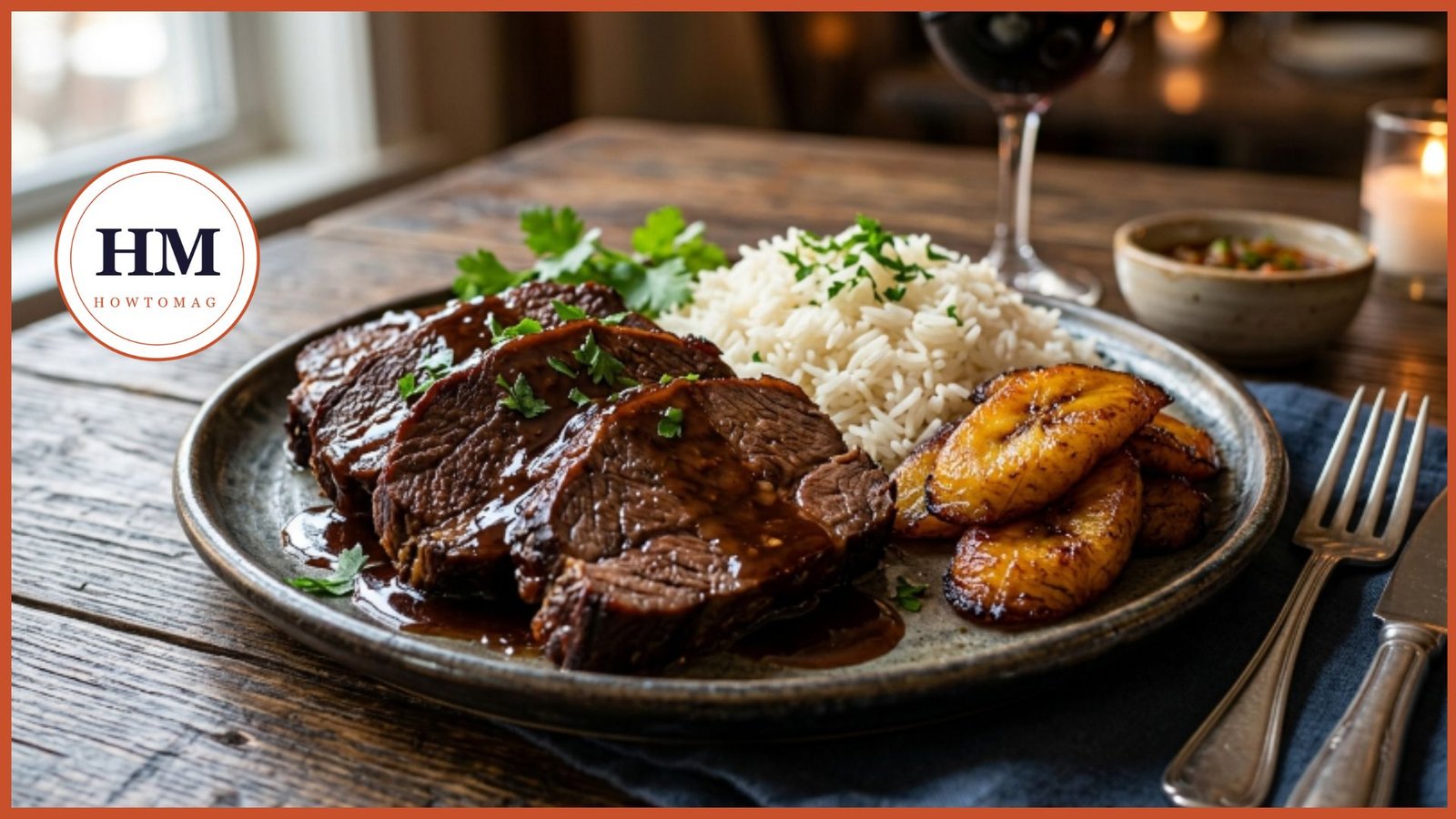
If you’ve ever typed “best asado negro near me” into your phone late at night, you already know the craving that comes with it — deep, smoky, slightly sweet braised beef that melts apart at the touch of a fork. Asado negro is one of Venezuela’s most beloved comfort dishes, and once you’ve tasted it, it becomes a dish you search for relentlessly. This guide will help you find authentic versions near you, understand what to look for, and make the most of every bite.
What Is Asado Negro and Why Is Everyone Talking About It?
Asado negro, which literally translates to “black roast,” is a slow-braised beef dish originating from the Caracas region of Venezuela. It gets its distinctive dark color from caramelized sugar and papelón (unrefined brown sugar), which form a rich, bittersweet glaze around a whole eye-round or sirloin roast.
The flavor profile is unlike any other braised beef dish in the world. It balances savory, sweet, and smoky notes through hours of slow cooking in a broth enriched with onions, garlic, Worcestershire sauce, red wine, and regional spices. The result is a tender, deeply colored roast that’s sliced thin and served over white rice, with fried sweet plantains (tajadas) on the side.
It’s a centerpiece dish, often reserved for Sunday family lunches and holiday gatherings, which makes finding the best asado negro near me feel like discovering a little piece of Venezuelan home cooking.
How to Find Authentic Asado Negro Near You
Search Smart, Not Just Fast
When you’re looking for the best asado negro near me, don’t just tap the first restaurant that appears in your search results. Instead, look for restaurants that specifically identify as Venezuelan, not just “Latin American.” Venezuelan cuisine has a very distinct culinary identity, and restaurants that specialize in it are far more likely to prepare asado negro the traditional way — slow-cooked, properly caramelized, and served with the right accompaniments.
Google Maps, Yelp, and TripAdvisor all allow you to filter by cuisine. Use keywords like “Venezuelan restaurant,” “comida venezolana,” or “pabellón criollo” to find places that are serious about regional dishes. If a restaurant serves pabellón criollo (the national dish), caraotas negras, and tequeños, there’s a strong chance their asado-negro is the real deal.
What to Look for on the Menu
An authentic asado negro should be listed as a full entrée, not a taco filling or a bowl topping. It’s traditionally served as sliced roast beef — not shredded — over white rice, with plantains and sometimes black beans. If the restaurant shreds the meat or presents it in a fusion context, it may taste good, but it likely isn’t the traditional preparation you’re looking for.
Ask your server how the meat is cooked. The key detail is slow braising with papelón or panela, which gives the dish its hallmark glossy, nearly black exterior. If they don’t know what papelón is, it might be worth exploring another option.
The Cultural Story Behind Asado Negro
Understanding the origins of asado negro helps you appreciate what you’re eating — and helps you spot authenticity when searching for the best asado negro near me.
The dish traces its roots to Caracas, the Venezuelan capital, where it became a staple of caraqueño home cooking during the 19th and 20th centuries. Families would prepare it for Sunday almuerzo, the most important meal of the week. The technique of caramelizing sugar before braising the beef was likely influenced by Spanish colonial cooking, but the use of papelón and local spices made it distinctly Venezuelan over time.
Today, Venezuelan diaspora communities across the United States, Colombia, Spain, and beyond have carried the recipe with them. This is actually great news for anyone searching for the best asado negro near me — wherever there is a Venezuelan community, there’s likely someone making this dish, whether in a restaurant, a food truck, or a weekend pop-up market.
Tips for Evaluating the Quality of Asado Negro
The Color Test
Genuine asado negro should be very dark — almost mahogany or near-black on the outside. This color comes from the caramelized sugar coating, not from burning or heavy sauce. If the meat looks pale or brown-gray, it likely wasn’t cooked with the traditional sugar-caramelization technique.
The Texture Test
Asado negro should be sliceable but incredibly tender. It shouldn’t fall apart like pulled pork, but it should yield gently under a fork. If the meat is tough or dry, the restaurant may have rushed the braising process, which typically requires several hours of low, slow heat.
The Sauce Test
The braising liquid left behind is reduced into a thick, slightly sweet, glossy sauce that’s spooned over the sliced meat. This sauce should be complex — savory, mildly sweet, with just a hint of smokiness. If the sauce tastes flat or overly salty, it’s a sign the recipe wasn’t carefully balanced.
Venezuelan Food Communities: Your Best Resource
Beyond restaurant apps, Venezuelan food communities on platforms like Facebook, Reddit, and Instagram can be your best allies when hunting for the best asado negro near me. Groups like “Venezolanos en [your city]” or local expat community boards frequently share recommendations for home cooks who sell traditional dishes, Venezuelan food festivals, or pop-up dining events.
These informal dining experiences often produce the most authentic asado negro you’ll ever find outside of Caracas, prepared by home cooks who grew up eating the dish every Sunday. Don’t underestimate the power of community knowledge when apps fall short.
Frequently Asked Questions
Q1: What does asado negro taste like?
Asado negro has a deep, rich flavor — savory and slightly sweet from caramelized sugar, with a tender, melt-in-your-mouth texture and a dark, glossy sauce.
Q2: Is asado negro the same as pot roast?
No. While both are braised beef dishes, asado negro uses papelón (raw cane sugar) to create a distinctly sweet-savory, near-black glaze that pot roast does not have.
Q3: What is traditionally served with asado negro?
It’s typically served with white rice, fried sweet plantains (tajadas), and sometimes black beans — a classic combination in Venezuelan cuisine.
Q4: Can I find asado negro outside of Venezuelan restaurants?
Occasionally, but rarely with authentic preparation. Your best bet when searching for the best asado negro near me is to focus on Venezuelan-specific restaurants or community food events.
Q5: How long does authentic asado negro take to cook?
Traditional asado negro is slow-braised for 3 to 5 hours. Any version cooked quickly is likely to lack the signature depth of flavor and caramelized coating that defines the dish.
The Ultimate Guide to Tarta de Choclo: A Soul-Warming South American Classic Worth Seeking Out