
Introduction: Your Mattress Is Dirtier Than You Think
You wash your sheets. You flip your pillows. But when was the last time you thought seriously about how to clean a mattress itself? For most people, the answer is uncomfortable — never, or maybe once years ago with a damp cloth and some wishful thinking.
Here’s the hard truth: the average mattress harbors millions of dust mites, dead skin cells, body oils, sweat, and potentially mold spores — all invisible to the naked eye but very much affecting your sleep quality and health. According to the Sleep Foundation, a typical mattress can absorb up to a liter of moisture per night just from perspiration alone.
Knowing how to clean a mattress thoroughly isn’t just about hygiene. It’s about protecting your investment, improving your sleep, and creating a healthier bedroom environment for you and your family. This guide walks you through everything — from the supplies you need to deep-cleaning methods, stain removal techniques, and how to keep things fresh long-term.
Why Regular Mattress Cleaning Should Be Non-Negotiable
Most people replace their mattresses every 7 to 10 years. That’s a long time to be sleeping on something that never gets a proper wash. Over that span, your mattres collects an alarming amount of biological debris, and without regular cleaning, it becomes a breeding ground for allergens and bacteria.
Dust mites are among the most common indoor allergens, and they thrive in the warm, humid environment of an unwashed mattres. For those with asthma, eczema, or allergic rhinitis, a dirty mattres can silently worsen symptoms night after night. Even for healthy sleepers, poor mattress hygiene can contribute to skin irritation, congestion, and disrupted rest.
Cleaning a mattress regularly — ideally every three to six months — significantly reduces these risks. It also extends the lifespan of your mattres, preserving its structural integrity and keeping it feeling fresher for longer. Think of it as preventive maintenance for one of the most used pieces of furniture in your home.
What You’ll Need Before You Begin
Before you clean a mattres, it helps to gather everything upfront so you’re not stopping mid-process to hunt for supplies. The good news is that most of what you need is probably already in your home.
You’ll want a vacuum cleaner with an upholstery attachment, baking soda, cold water, a mild dish soap or enzyme-based cleaner, white vinegar, a few clean cloths or microfiber towels, and a spray bottle. For biological stains like blood or urine, a dedicated enzyme cleaner — available at most grocery or pet supply stores — works significantly better than general-purpose solutions.
Avoid using hot water on a mattress. Heat can set stains and potentially damage certain foam materials. Cold or lukewarm water is almost always the safer, more effective choice when spot-cleaning.
How to Clean a Mattress: The Full Step-by-Step Process
Step 1 — Strip the Bed and Wash All Bedding
The first step in the mattress cleaning process is to strip everything off the bed. Remove your sheets, pillowcases, mattres topper (if you have one), and any mattres protector. Wash all of these in hot water, as high heat kills dust mites and bacteria far more effectively than a warm or cool cycle.
While your bedding is in the wash, you have unobstructed access to the mattres itself — which is exactly what you need to do this properly.
Step 2 — Vacuum the Entire Surface
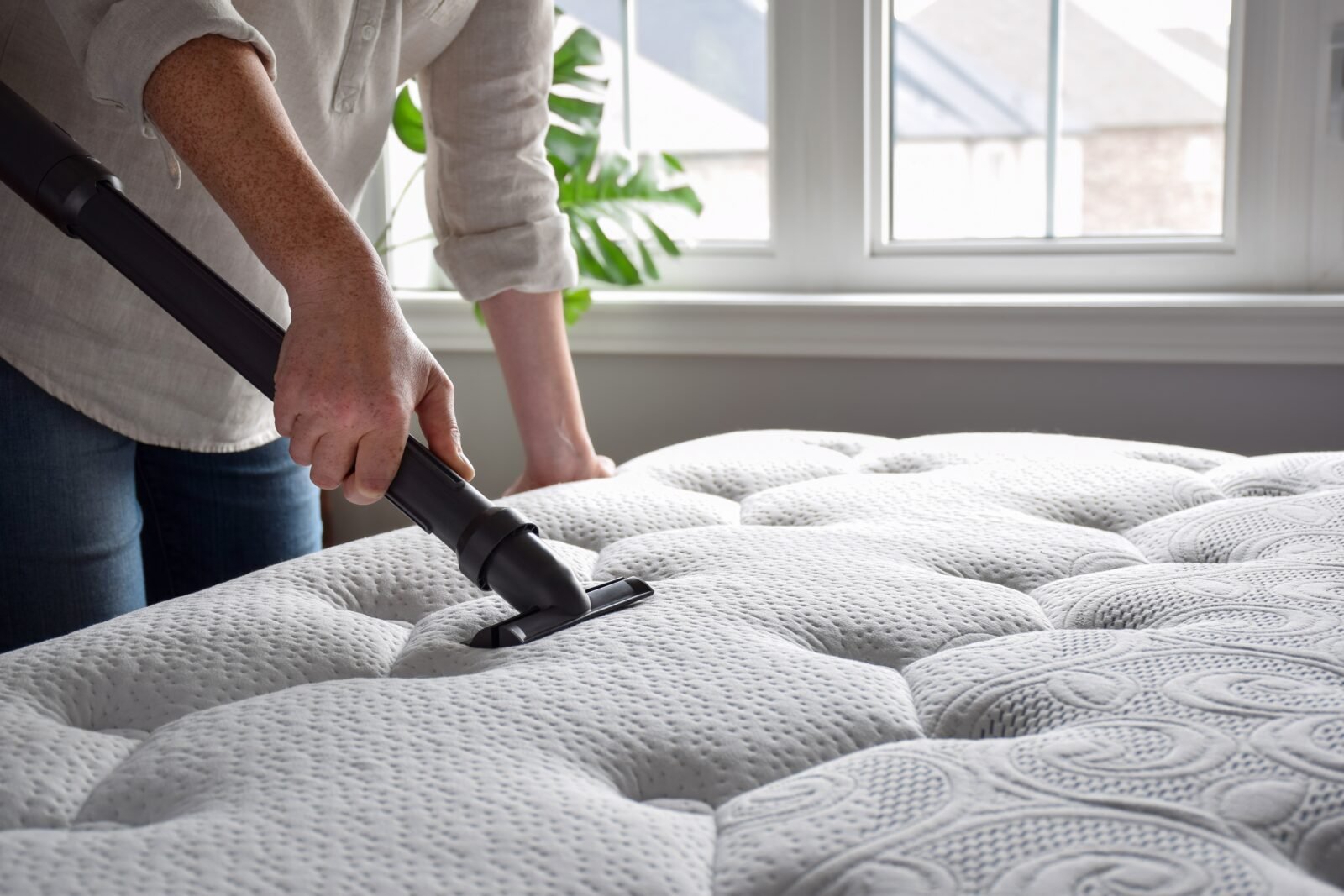
This step is more important than most people realize. Use your vacuum’s upholstery attachment to slowly and methodically go over the entire top surface of the mattress, paying careful attention to seams, tufts, and edges where dust, dead skin, and debris tend to accumulate.
Don’t rush this part. A thorough vacuuming removes the loose surface material that, if left in place, would just get pushed deeper into the fabric during the next steps. Once you’ve done the top, flip the mattress and vacuum the underside and all four sides as well.
Step 3 — Deodorize with Baking Soda
Baking soda is one of the most effective and affordable tools you have when it comes time to clean a mattress. It works by neutralizing acidic odors — the kind left behind by sweat, body oils, and general use — rather than just masking them.
Sprinkle a generous, even layer of baking soda over the entire top surface of the mattress. For best results, leave it on for at least 30 minutes, though if you can let it sit for several hours (or even overnight), you’ll get noticeably better odor elimination. The longer it sits, the more deeply it can absorb embedded smells.
After the soak time is up, vacuum up all the baking soda thoroughly. You should immediately notice a fresher smell.
Step 4 — Treat Stains Before They Set Further
Stain treatment is where many people make the mistake of scrubbing aggressively, which actually drives the stain deeper into the mattress fibers. Instead, always blot — press firmly with a clean cloth to absorb liquid, then apply your cleaner.
For general stains, mix a small amount of dish soap with cold water, dip a clean cloth in the solution, and blot the stained area. Work from the outside of the stain inward to prevent spreading. For tougher or older stains, a commercial enzyme cleaner is your best ally — spray it on, let it sit for 10 to 15 minutes, then blot clean.
Whatever you use, avoid soaking the mattress. Excess moisture is your enemy here, because it can seep into the foam or coils and create the perfect environment for mold and mildew to develop inside the mattress — a problem that’s very difficult to reverse once it starts.
Step 5 — Spot-Clean with a Vinegar Solution for Odors
White vinegar diluted with water (roughly a 50/50 mix in a spray bottle) is excellent for tackling stubborn odors, particularly those caused by sweat or urine. Lightly mist the affected area — do not saturate — and allow it to air dry before moving on.
The vinegar smell dissipates as it dries, taking unpleasant odors with it. For extra freshness, follow up with another light application of baking soda once the vinegar has dried, leave it for an hour, then vacuum again.
Step 6 — Allow the Mattress to Dry Completely
This step is critical and often skipped by people in a hurry. A mattress that goes back onto the bed while still damp can develop mold or mildew internally, undoing all your cleaning work and creating a health hazard.
Open windows, point a fan at the mattress, or if possible, move it into direct sunlight (UV rays are naturally antimicrobial and help with odors too). Depending on how much moisture was used during cleaning, drying can take anywhere from a couple of hours to most of a day. Patience here is genuinely worth it.
How to Remove Specific Stains from a Mattress
Blood Stains
Blood is protein-based, which means hot water will set it permanently — always use cold water. For fresh blood, blot up as much as possible immediately, then apply cold water with a cloth. Hydrogen peroxide (3%) can be effective for dried blood: apply a small amount, allow it to fizz, then blot away. Test on an inconspicuous area first, as peroxide can lighten some fabrics.
Urine Stains
Urine — whether from a child, a pet, or an adult with incontinence — requires an enzyme cleaner to break down the uric acid crystals responsible for both the stain and the persistent smell. Standard cleaners treat the surface but leave behind the crystals, which is why the odor returns when the area gets humid again.
Apply the enzyme cleaner generously, cover with a damp cloth to keep it moist while it works, and let it sit for at least 15 minutes before blotting dry. Follow with baking soda to absorb any remaining moisture and odor.
Sweat and Body Oil Stains
These yellowish stains are among the most common and develop gradually over time. Mix equal parts hydrogen peroxide, dish soap, and baking soda into a paste, apply it to the affected areas with a soft brush, let it sit for 30 minutes, then wipe and vacuum away. Repeating this process for older stains may be necessary.
Deep Cleaning a Mattress vs. Routine Maintenance
Understanding the difference between a deep clean and regular upkeep helps you plan a realistic mattress care routine. A deep clean — the kind described above — should happen two to four times per year, or immediately after any significant spill or accident.
Routine maintenance, on the other hand, involves simpler steps performed more frequently. Vacuuming the surface every time you change your sheets (roughly every week or two) prevents buildup from accumulating to problematic levels. Airing the mattress out — simply pulling back the bedding for 20 to 30 minutes each morning — allows moisture to evaporate and reduces humidity inside the mattress layers.
Rotating or flipping your mattress every three months (if it’s designed to be flipped) ensures even wear and prevents the buildup of body impressions in one area. Some modern foam mattreses are one-sided and should only be rotated, not flipped — check your manufacturer’s guidelines.
The Role of a Mattress Protector
Once you’ve done the work to clean a mattress properly, a quality mattress protector is one of the best investments you can make to keep it that way. A waterproof, breathable protector creates a barrier between you and the mattres surface, blocking moisture, body oils, dust mites, and allergens from penetrating the fabric.
Look for a protector that is fully waterproof (not just water-resistant), machine washable, and made from breathable materials so it doesn’t trap heat. The Asthma and Allergy Foundation of America recommends allergen-proof encasements for people with dust mite allergies — these zip completely around the mattress and provide the most comprehensive protection.
Wash your mattress protector every month or two, or immediately after any accident. This simple habit dramatically reduces the frequency with which you need to deep-clean the mattress itself.
Special Considerations for Different Mattress Types
Not all mattresses respond the same way to cleaning. Memory foam mattresses, for instance, are particularly sensitive to moisture — they absorb liquid quickly and dry slowly, making them especially vulnerable to mold. When you clean a memory foam mattres, use as little liquid as possible and prioritize baking soda and dry vacuuming over wet methods.
Latex mattresses are somewhat more resilient but still shouldn’t be saturated. Innerspring mattresses are the most forgiving in terms of moisture tolerance, but the coils can rust if consistently exposed to excessive dampness, so the same caution applies.
Hybrid mattresses — those combining foam layers with an innerspring base — follow the same principles as memory foam for cleaning purposes, since the foam layers are what you’re primarily treating.
Always check your mattres manufacturer’s care instructions before using any cleaning method, particularly if your mattress is still under warranty. Some cleaning approaches, like using certain chemical cleaners, may void warranty coverage.
When It’s Time to Replace Instead of Clean
Sometimes, no amount of cleaning can save a mattress. If yours has developed persistent mold or mildew growth that penetrates beyond the surface, has deep-set odors that don’t respond to treatment, shows significant sagging or structural damage, or is simply old enough to have lost its support and comfort, replacement is the more sensible option.
A mattress that’s compromising your sleep quality or contributing to allergy symptoms isn’t serving its purpose — and no cleaning routine can restore structural integrity once it’s gone.
Conclusion
There’s something quietly satisfying about knowing your sleeping surface is genuinely clean — not just covered up with fresh sheets, but properly cleaned from the fabric down. Taking the time to clean a mattress using these methods means you’re removing real contaminants, real allergens, and real odors that affect the quality of every night’s rest.
The process doesn’t require expensive equipment or professional services. What it requires is a little time, the right materials, and the understanding that mattress hygiene is just as important as any other part of your home cleaning routine.
Make it a habit — vacuum when you change your sheets, deep clean every season, invest in a good protector — and your mattress will reward you with years of healthier, more comfortable sleep. Your body does its best repair work while you rest. Give it the cleanest possible environment to do that work.
Frequently Asked Questions
Q1: How often should I clean a mattress?
Ideally, you should vacuum your mattress every time you change your sheets — approximately every one to two weeks — and perform a full deep clean at least twice a year, or every three to four months for households with pets, allergy sufferers, or young children. After any significant spill or accident, clean the affected area immediately.
Q2: Can I use a steam cleaner on my mattress?
Steam cleaning can be effective for sanitizing a mattress surface and killing dust mites, but it must be used with extreme caution. Excessive heat and moisture can damage memory foam and create internal dampness that leads to mold. If you use a steam cleaner, keep it moving quickly, use it sparingly, and ensure thorough drying afterward with fans and open windows. Always check your mattress manufacturer’s guidelines first.
Q3: How do I get the smell out of a mattress without washing it?
Baking soda is the most effective odor-neutralizing option for a mattress. Sprinkle it generously over the surface, let it sit for several hours (overnight is ideal), then vacuum thoroughly. For more stubborn odors — particularly those from urine or sweat — a light misting of diluted white vinegar followed by baking soda works extremely well. Placing the mattress in direct sunlight, if possible, also naturally eliminates odors.
Q4: Is it safe to use hydrogen peroxide to clean a mattress?
Yes, in most cases. A 3% hydrogen peroxide solution (the standard concentration available at pharmacies) is effective for removing blood stains and can help with general stain treatment. However, it has mild bleaching properties, so test it on a hidden area first, especially on colored or dark mattresses. Never use a higher concentration than 3%, and always blot rather than saturate the area.
Q5: Can I clean a mattress myself, or should I hire a professional?
For the vast majority of mattress cleaning needs, DIY methods are completely sufficient — and significantly more affordable. The steps outlined in this guide handle everything from routine freshening to stain removal effectively. Professional mattress cleaning services are worth considering if your mattress has severe mold growth, deeply embedded odors that don’t respond to home treatment, or if you simply prefer to have an expert handle it. For regular maintenance, however, doing it yourself is entirely practical and effective.