
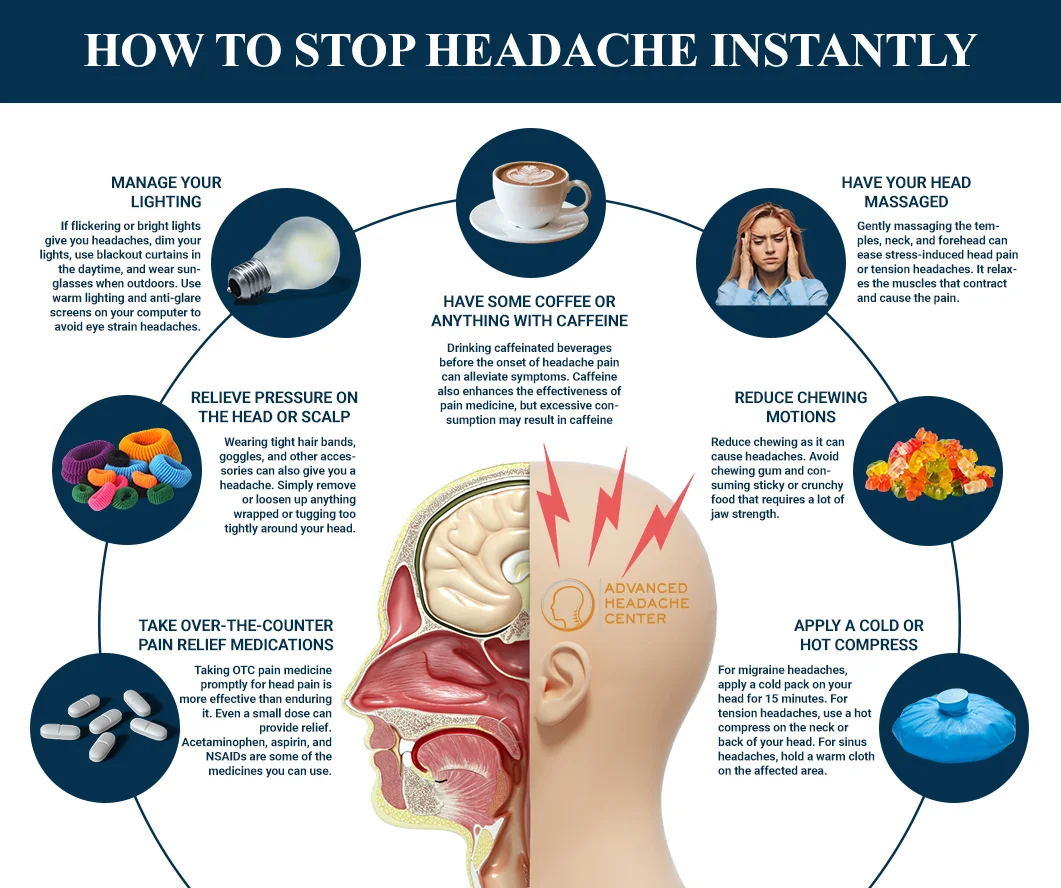
Introduction: When a Headache Hits, Every Minute Counts
There’s a particular kind of frustration that comes with a headache arriving at exactly the wrong moment. Whether it’s creeping in during a busy workday, building behind your eyes on a long commute, or hammering at your temples just as you’re trying to wind down for the evening, a headache demands your attention in the most inconvenient way possible.
The good news is that knowing how to get rid of a headache quickly is not some secret reserved for medical professionals. There are genuinely effective strategies — many of them natural, immediate, and completely free — that can reduce or eliminate head pain in a surprisingly short amount of time. The key is understanding what kind of headache you’re dealing with, why it’s happening, and which intervention is most likely to work for your specific situation.
This guide brings together the most reliable, evidence-informed methods for fast headache relief. From hydration and pressure point techniques to cold therapy and breathing exercises, each approach here has real physiological backing — not just anecdotal buzz. Whether you’re looking for a remedy you can use right now or trying to build a smarter long-term strategy for managing recurring head pain, this is the comprehensive resource you’ve been looking for.
Understanding Why Headaches Happen in the First Place
Before you can effectively tackle how to get rid of a headache, it helps enormously to understand what’s actually causing it. Headaches are not a single condition — they’re a symptom with dozens of possible triggers, and the most effective remedy often depends on the root cause.
The most common type is the tension headache, which accounts for the majority of all headache episodes experienced by adults. These feel like a tight band squeezing around the head, often brought on by muscle tension in the neck and shoulders, stress, poor posture, prolonged screen time, or fatigue. They’re not usually severe, but they’re persistent and genuinely disruptive.
Migraines are a different beast entirely. They tend to be more intense, often concentrated on one side of the head, and frequently accompanied by sensitivity to light and sound, nausea, and sometimes visual disturbances called auras. Migraines have a neurological component and can be triggered by hormonal shifts, certain foods, strong smells, changes in sleep patterns, or even weather changes.
Dehydration headaches arise when the body doesn’t have enough fluid — the brain actually shrinks slightly away from the skull under significant dehydration, causing pain. Sinus headaches come from inflammation and pressure in the sinus cavities, often accompanying a cold, allergies, or sinus infection. And cluster headaches, though less common, are intensely painful and localized around one eye.
Knowing which type you’re dealing with shapes how to get rid of a headache most efficiently — which is why the strategies below are organized to match the most likely causes and situations.
Hydration: The Fastest and Most Overlooked Fix
If you’re wondering how to get rid of a headache and you haven’t had much water in the past few hours, start here. Dehydration is one of the leading causes of headaches — and it’s also one of the most instantly correctable.
Research published in journals on headache medicine has consistently found that drinking adequate water can relieve dehydration-related headache symptoms within 30 minutes to two hours. That’s fast enough to feel meaningful when you’re in pain. The recommended approach is to drink a large glass of water — roughly 16 ounces — immediately, then continue sipping throughout the next hour.
Electrolytes can accelerate this process. When dehydration is significant, water alone may not restore balance quickly enough because sodium, potassium, and magnesium are also lost. Adding a pinch of sea salt and a squeeze of lemon to your water, or drinking a diluted electrolyte beverage, can help the body absorb fluids more efficiently and address the underlying imbalance faster.
What many people don’t realize is that even mild dehydration — the kind where you don’t feel particularly thirsty — can trigger or worsen head pain. Making hydration your first line of defense whenever a headache arrives is one of the simplest and most consistently effective moves you can make.
Cold and Heat Therapy: Two Powerful Tools for Different Headaches
Temperature therapy is one of the most clinically supported ways for how to get rid of a headache without medication, and the right choice between cold and heat depends on the type of headache you have.
Cold Therapy for Migraines and Throbbing Pain
For migraines and other vascular headaches — the kind with a throbbing or pulsing quality — cold is your ally. Applying a cold pack or even a bag of ice wrapped in a cloth to the back of the neck or the forehead constricts blood vessels, which reduces the vascular dilation that contributes to that pounding, pulsing sensation.
A 2013 study published in the Hawaiian Medical Journal found that applying a frozen neck wrap at the onset of a migraine significantly reduced pain intensity for participants. You don’t need a specialized product — a bag of frozen peas wrapped in a tea towel works perfectly well. Apply it for 15 to 20 minutes, and many people find the relief begins within the first few minutes of application.
Heat Therapy for Tension Headaches
Tension headaches, on the other hand, often respond better to warmth. If your headache feels like a vice tightening around your skull — particularly if you notice accompanying neck stiffness or shoulder tightness — a warm compress or heating pad applied to the back of the neck and upper shoulders can release the muscle tension that’s driving the pain.
A warm shower can serve the same purpose, with the added benefit of steam helping if any sinus congestion is involved. Let the warm water run over your neck and shoulders for five to ten minutes and pay attention to how your muscles respond as they relax. For many tension headache sufferers, this is one of the quickest routes to meaningful relief.
Pressure Points: Ancient Technique, Real Results
Acupressure — applying firm pressure to specific points on the body — has been used for thousands of years across multiple healing traditions, and modern research is increasingly validating its effectiveness for pain relief, including headache management.
The most well-known pressure point for headaches is LI4, also called “Hegu,” located in the fleshy web between the thumb and index finger. To stimulate it, pinch that area firmly between the thumb and forefinger of your opposite hand and apply firm circular pressure for 30 to 60 seconds. Research published in Cephalalgia, the journal of the International Headache Society, has found acupressure at this point can help reduce headache intensity and duration.
Another effective point for anyone trying to understand how to get rid of a headache through pressure techniques is the GB20 point, located at the base of the skull where the neck muscles attach. You can reach it by clasping your hands behind your head and using your thumbs to press upward into the hollows on either side of the spine. Hold firm pressure there for 60 seconds while taking slow, deep breaths. The relief, when it comes, tends to spread from the point of pressure outward across the scalp.
The temples themselves respond well to gentle circular massage. Using your fingertips to make slow, firm circles on both temples simultaneously — especially while breathing deeply — can interrupt the pain-tension cycle that keeps many headaches going longer than they need to.
Breathing and Relaxation: How Your Nervous System Holds the Key
Stress and anxiety are among the most reliable headache triggers, and they work through the nervous system — specifically by activating the sympathetic “fight or flight” response, which causes muscle tension, changes in blood flow, and heightened sensitivity to pain. Learning how to get rid of a headache through breathing and relaxation techniques is not a soft or secondary strategy. It’s a direct intervention into the physiological process driving the pain.
Diaphragmatic Breathing
Deep, slow breathing — specifically breathing from the diaphragm rather than the chest — activates the parasympathetic nervous system, which is the body’s “rest and recover” mode. This counteracts the tension and constriction associated with stress-related headaches.
Try breathing in slowly through your nose for a count of four, holding gently for two counts, then exhaling through your mouth for a count of six. The extended exhale is particularly important — it’s the phase that most strongly engages the parasympathetic response. Repeat this for five minutes and pay attention to any changes in the tightness behind your forehead or temples.
Progressive Muscle Relaxation
Progressive muscle relaxation involves systematically tensing and then releasing different muscle groups. Starting from your feet and working upward, tense each group of muscles for five seconds, then release completely and notice the sensation of relaxation before moving to the next group. By the time you reach your neck, shoulders, and face — the muscles most involved in tension headaches — you’ll often find they release more fully than they would have through willpower alone.
Caffeine: A Strategic and Cautious Tool
Caffeine occupies an interesting and somewhat complicated position in the headache conversation. On one hand, it genuinely helps in the short term — caffeine constricts blood vessels and enhances the absorption of pain-relieving compounds, which is why it’s included in many over-the-counter headache medications. On the other hand, caffeine dependence is itself a significant cause of headaches, with withdrawal pain being among the most common morning headache triggers.
Used strategically, a moderate amount of caffeine — a standard cup of coffee or tea — can be an effective part of how to get rid of a headache, particularly for those who don’t consume it regularly. For daily caffeine drinkers, however, the picture is more nuanced. If you’ve had your usual caffeine intake and still have a headache, more is unlikely to help. If you’ve skipped your morning coffee and your head is throbbing, that’s a withdrawal headache and a small dose of caffeine will almost certainly provide rapid relief.
The lesson here is to use caffeine knowingly and sparingly as a headache tool, not habitually — and to be honest with yourself about whether your caffeine habits are contributing to your headache patterns in the first place.
Ginger, Peppermint, and Natural Anti-Inflammatories
Nature offers a handful of genuinely effective compounds for headache relief that deserve more recognition alongside over-the-counter options.
Ginger contains potent anti-inflammatory and anti-nausea compounds. A study published in Phytotherapy Research found that ginger powder was nearly as effective as sumatriptan — a common migraine medication — at reducing migraine severity, with far fewer side effects. Fresh ginger tea, made by steeping a few slices of peeled ginger in hot water for 10 minutes, is a fast and accessible way to leverage this.
Peppermint oil applied topically to the temples and forehead has been shown in multiple studies to provide meaningful pain relief for tension headaches, comparable in some trials to acetaminophen. The active compound, menthol, creates a cooling sensation and appears to inhibit serotonin receptors involved in pain signaling. Dilute a few drops in a carrier oil and apply gently — avoid direct contact with eyes.
Magnesium deserves special mention for anyone dealing with frequent or recurring headaches. Magnesium deficiency is strongly associated with migraine frequency, and numerous clinical trials have found that magnesium supplementation reduces both the frequency and intensity of migraine attacks. Foods rich in magnesium include dark leafy greens, almonds, pumpkin seeds, and dark chocolate — all worthy additions to the diet of anyone prone to head pain.
Lifestyle Adjustments That Prevent Headaches Before They Start
The most powerful strategy for how to get rid of a headache is ultimately to prevent it from arriving in the first place. Several evidence-backed lifestyle habits dramatically reduce headache frequency and severity for most people.
Sleep consistency is one of the most important. Both insufficient sleep and oversleeping are well-documented headache triggers. Going to bed and waking at consistent times — even on weekends — regulates the neurological rhythms that influence headache vulnerability.
Screen time management matters too. The combination of blue light exposure, eye strain, and forward head posture that comes with prolonged screen use is a recipe for tension headaches. The 20-20-20 rule — every 20 minutes, look at something 20 feet away for 20 seconds — is a simple habit that reduces eye strain significantly.
Regular physical activity reduces overall headache frequency by improving circulation, reducing stress hormones, and releasing endorphins. Even a 20-minute walk taken consistently five days a week has been shown to reduce migraine frequency in susceptible individuals.
When to See a Doctor About Your Headaches
This guide is focused on helping you understand how to get rid of a headache through safe and proven methods, but it’s important to know when a headache warrants medical attention rather than home treatment.
Seek prompt medical care if a headache is the worst you’ve ever experienced, comes on suddenly and severely like a “thunderclap,” is accompanied by fever, stiff neck, confusion, vision changes, or weakness, or follows a head injury. These can be signs of conditions — including meningitis or a subarachnoid hemorrhage — that require immediate evaluation.
For persistent, frequent, or changing headache patterns, a conversation with your primary care physician or a neurologist is well worth having. Many people live unnecessarily with chronic headaches when effective preventive treatments are available.
Conclusion: Fast Headache Relief Is Within Your Reach
Understanding how to get rid of a headache quickly comes down to combining the right knowledge with the right action at the right moment. Hydration addresses the dehydration trigger. Cold and heat therapy work directly on the vascular and muscular components of pain. Pressure point techniques interrupt pain signaling through proven pathways. Breathing and relaxation deactivate the stress response that feeds tension headaches. And natural compounds like ginger, peppermint, and magnesium provide real anti-inflammatory and analgesic support.
None of these approaches requires a prescription, a pharmacy trip, or special equipment. Most of them are available to you right now, wherever you are. The key is to match the remedy to the cause and to act early — headaches almost always respond better to intervention in their early stages than after they’ve reached full intensity.
By building awareness of your personal headache triggers and keeping these strategies ready to deploy, you’ll find yourself spending far less time in pain and far more time getting on with your life.
Frequently Asked Questions About How to Get Rid of a Headache
Q1: What is the fastest way to get rid of a headache without medication?
The fastest non-medication approach combines two or three quick interventions simultaneously: drink a large glass of water immediately, apply a cold pack to the back of your neck if it’s a throbbing headache or a warm compress if it feels like a tension band, and apply firm pressure to the LI4 acupressure point between your thumb and index finger for 60 seconds. Most people experience meaningful relief within 15 to 30 minutes using this combination.
Q2: Can drinking water really get rid of a headache?
Yes, absolutely — if dehydration is the cause. Dehydration-related headaches can begin to resolve within 30 minutes of adequate fluid intake. Drink 16 ounces of water immediately and continue hydrating steadily. If you’ve been sweating, drinking alcohol, or consuming caffeine without adequate water, dehydration is a very likely contributor to your pain and rehydration is the most direct fix.
Q3: Is it better to use heat or cold for a headache?
It depends on the type. Cold therapy — an ice pack or cold compress on the forehead or back of the neck — works best for migraines and throbbing, vascular headaches by constricting blood vessels. Heat therapy — a warm compress or heating pad on the neck and shoulders — works best for tension headaches by relaxing tight muscles. If you’re unsure which type you have, try cold first for a few minutes, then switch to heat if it doesn’t help.
Q4: What pressure point gets rid of a headache quickly?
The LI4 point, located in the fleshy webbing between the thumb and index finger, is the most widely researched and clinically supported acupressure point for headache relief. Apply firm pinching pressure to this area for 30 to 60 seconds on each hand. The GB20 points at the base of the skull are also effective, particularly for headaches that originate from neck tension. Apply upward thumb pressure into the hollows on either side of the spine at the base of the skull.
Q5: How can I stop frequent headaches from coming back?
Preventing recurrent headaches involves addressing the most common triggers consistently. Staying well-hydrated throughout the day, maintaining regular sleep and wake times, managing screen time with regular breaks, exercising regularly, and ensuring adequate magnesium intake through diet or supplementation are all evidence-backed approaches. Keeping a headache diary — noting when headaches occur, how long they last, and what preceded them — can help you identify your personal triggers so you can avoid or mitigate them proactively.