
Introduction
In an era of mobile payments, digital wallets, and instant bank transfers, the personal check might seem like a relic from another time. Yet checks remain a surprisingly active part of everyday financial life. Rent payments, contractor invoices, charitable donations, school fees, and countless other transactions still rely on paper checks — and knowing how to fill one out correctly, particularly when the amount involves cents, is a practical skill that saves you from awkward errors, returned payments, and potential financial headaches.
The most common stumbling point for people who do not write checks regularly is the cents portion. It is easy to write a whole-dollar amount confidently but then hesitate when the total is something like $347.83 — how exactly do you express that in words on the appropriate line? What is the correct format? And does it matter if you get it slightly wrong?
This complete guide answers every one of those questions. You will learn how to write a check with cents accurately, understand what each field on the check is for, avoid the most common mistakes, and walk away with the confidence to fill out any check correctly the first time.
Understanding the Anatomy of a Personal Check Before You Write
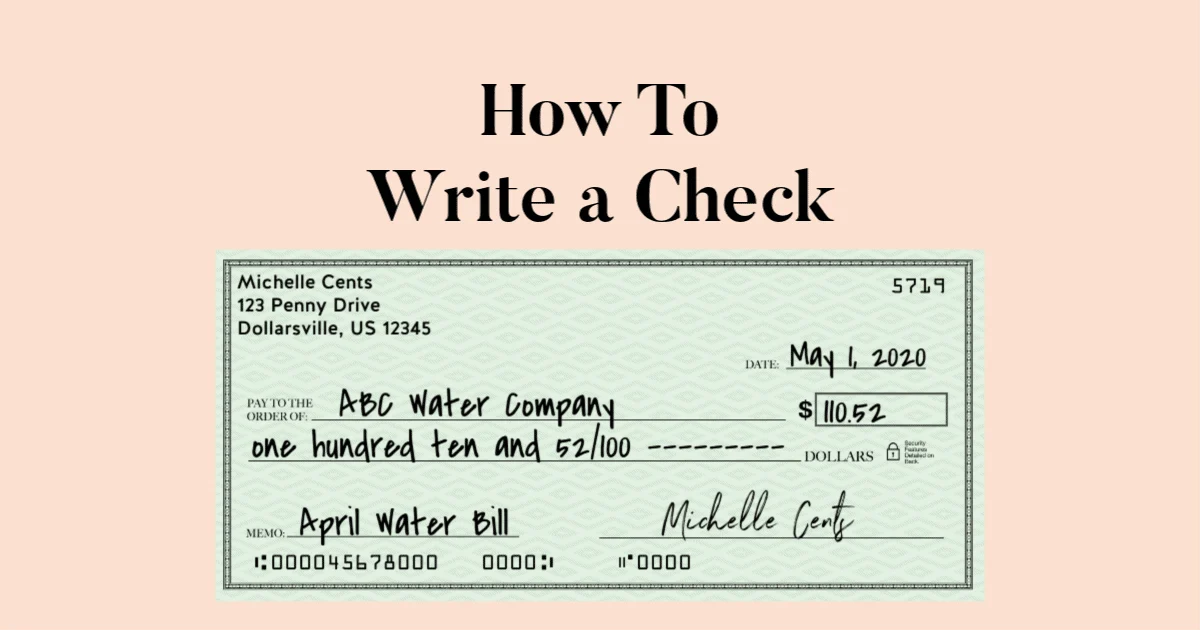
Before you can write a check with cents properly, it helps to understand what each part of the check does and why it exists. A standard personal check in the United States has six key fields, each serving a distinct function in the payment process.
The date line sits in the upper-right corner and records when the check was written. The “Pay to the Order of” line is where you write the name of the person or organization receiving the payment. The numeric dollar box — a small rectangular box on the right side — is where you write the payment amount in numerals. The written dollar line is the long line below the payee line where you express the full amount in words, including the cents. The memo line in the lower-left corner is optional and used to note what the payment is for. Finally, the signature line in the lower-right corner is where you sign to authorize the payment.
Of all these fields, the written dollar line is where the process of writing a check with cents becomes most nuanced — and it is the field that causes the most confusion. Banks use this line as the authoritative representation of the amount, so getting it right is genuinely important.
How to Write a Check with Cents: The Numeric Box
The first step when you write a check with cents is filling in the numeric dollar box. This box, sometimes labeled with a dollar sign on its left side, is where you write the payment amount in standard numerical format.
For a payment of three hundred forty-seven dollars and eighty-three cents, you would write 347.83 in the box. Write the numbers as close to the left edge of the box as possible, and draw a horizontal line after the amount to fill any remaining space. This prevents anyone from altering the amount by adding digits in front of or after your written number — a small but meaningful fraud-prevention habit.
Always use a decimal point to separate the dollars from the cents. Do not use a comma, a slash, or any other separator — the decimal point is the universally recognized standard in U.S. financial notation. The process of writing a check with cents starts cleanly here before moving on to the written line.
How to Write a Check with Cents: The Written Dollar Line
This is the field where most people pause when they write a check with cents, and it is the most important field to get right. The written dollar line is where you express the full payment amount in English words, and banks treat this line as the definitive representation of what you intended to pay.
The Correct Format for Dollars and Cents in Words
The standard and universally accepted format for writing a check with cents on the written line is to write the dollar amount in full words, followed by the word “and,” followed by the cents expressed as a fraction over 100.
For example, for a payment of $347.83, the written line would read:
Three hundred forty-seven and 83/100
That fraction — 83/100 — is the key. Rather than writing out the cents in full words (“eighty-three cents”), the standard banking convention is to express them as a fraction of one hundred, because one dollar contains one hundred cents. This format is clean, unambiguous, and universally understood by bank processing systems.
After writing the amount, draw a horizontal line extending to the end of the written dollar line to fill any blank space. This, again, prevents unauthorized alterations.
What If the Amount Is a Round Dollar With No Cents?
If you need to write a check with cents that happen to be zero — meaning the amount is a round dollar figure — the convention is slightly different. For $200.00, you would write:
Two hundred and 00/100
Some people write “Two hundred and no/100” or “Two hundred dollars even” — all of these are acceptable, though “Two hundred and 00/100” is the most standardized format and the one least likely to cause any processing confusion.
Writing Cents When the Dollar Amount Is Low
When you write a check with cents on a small amount — say $12.47 — the same rules apply. The written line reads:
Twelve and 47/100
Notice that the word “dollars” is not required on the written line itself because most checks already have the word “dollars” printed at the end of that line. You are simply filling in the amount that precedes the pre-printed “dollars.” If your check does not have “dollars” pre-printed, add it at the end: “Twelve and 47/100 dollars.”
Filling Out the Rest of the Check Correctly
Once you have the written line handled, the remaining fields are more straightforward. Filling them out completely and accurately is part of ensuring the check processes without any issues.
The Date Line
Write the current date in the upper-right corner. The standard U.S. format is month/day/year, though spelling out the month is also acceptable and arguably clearer — “May 15, 2026” is just as valid as “05/15/2026.” Avoid post-dating checks (writing a future date) unless you have specifically arranged this with the recipient, as post-dated checks can cause banking complications.
The Pay to the Order of Line
Write the full legal name of the individual or the official name of the business or organization receiving payment. Accuracy matters here — if you are paying a business, write the name exactly as it appears on any invoice or official correspondence. If the name is slightly wrong, the recipient’s bank may have difficulty processing the deposit.
The Memo Line
This optional field is your own reference note. When you write a check with cents for a specific purpose — a rent payment for a particular month, an invoice number, a utility account number — noting it in the memo line creates a paper record that can be invaluable if there is ever a dispute about what the payment was for. It does not affect whether the check processes, but it adds clarity for both you and the recipient.
The Signature Line
Sign your name exactly as it appears on your bank account. This is the authorization that makes the check legally valid. Without your signature, a check is not negotiable — the bank will not process it. Never sign a check before filling in all the other fields, and never leave a signed blank check unattended.
Common Mistakes to Avoid When You Write a Check with Cents
Even people who write checks regularly make occasional errors. Knowing the most common mistakes in advance is the best way to avoid them.
The most frequent error is writing the cents incorrectly on the written line — either spelling them out as words (“eighty-three cents”) rather than using the fraction format, or omitting the cents entirely. Always use the fraction format when you write a check with cents: it is the banking standard, and departing from it can cause confusion or delay.
The second most common mistake is leaving gaps on the written dollar line after the amount. Banks see blank space on this line as a potential tampering risk. Fill the remaining space with a drawn line all the way to the pre-printed “dollars” at the end.
Forgetting to sign the check is surprisingly common, particularly when people are in a hurry. An unsigned check will be returned unprocessed — and depending on the context, this can mean late payment penalties or other complications.
Writing in pencil or erasable pen is another mistake worth flagging. Checks should always be completed in permanent ink — blue or black ballpoint is standard. Pencil or erasable ink can be altered, which creates both a fraud risk and a potential dispute.
Finally, numeric and written amounts that do not match create confusion for banks. If the numeric box says $347.83 but the written line says “three hundred forty-five and 83/100,” the bank will typically honor the written line amount — but the discrepancy may delay processing or require clarification. Always double-check that both amounts match before you finalize any check.
What to Do If You Make a Mistake on a Check
Mistakes happen. If you catch an error while filling out a check, the safest course of action is to void the check and start fresh with a new one. To void a check, write “VOID” in large letters across the front — covering the payee line, the amount box, and the signature line — and then destroy or safely store the voided check for your records.
Banks generally accept minor corrections if they are initialed by the check writer, but this creates ambiguity and can slow down processing. For anything involving the amount — particularly when you write a check with cents and realize the numbers are wrong — a fresh check is always the cleaner, safer choice.
According to guidance from the Consumer Financial Protection Bureau (CFPB), voiding and rewriting is the recommended approach for any significant error, and keeping records of voided checks supports clean personal financial record-keeping.
Tips for Keeping Your Check Writing Accurate and Fraud-Safe
A few consistent habits make every check you write — including every check with cents — more secure and less error-prone.
Always write in permanent ink. Always draw a line after the amount in both the numeric box and the written dollar line. Double-check that the payee name, date, numeric amount, written amount, and signature are all complete and consistent before handing over or mailing any check.
Keep a running check register — a simple log of every check you write, including the check number, date, payee, and amount. This practice, recommended by financial advisors and banking institutions alike, makes reconciling your bank statement straightforward and helps you catch any unauthorized use of your checks immediately.
For high-value payments, consider using certified checks or money orders rather than personal checks, as these come with bank-level guarantees of funds availability. For everyday payments where you need to write a check with cents for routine bills or services, the personal check process outlined in this guide is entirely sufficient when followed carefully.
The Federal Deposit Insurance Corporation (FDIC) has long recommended that consumers maintain awareness of their checking account activity to quickly identify any unauthorized transactions — a habit that pairs naturally with keeping a check register.
Conclusion
Writing a check with cents is one of those financial skills that feels slightly intimidating the first time but becomes second nature with a little practice and understanding. The key is the written dollar line — specifically the fraction format for expressing cents — and the habit of drawing a line through any remaining blank space after the amount.
Fill in the date, payee name, numeric amount, written amount, memo, and signature completely and in permanent ink. Verify that the numeric and written amounts match. Draw lines to fill blank spaces. Sign last. These simple habits make every check you write accurate, professional, and fraud-resistant.
The next time you sit down to write a check with cents — whether it is for $12.47 or $1,247.83 — you will have the full knowledge and confidence to fill it out correctly from start to finish.
Frequently Asked Questions
How do you write cents on the written dollar line of a check?
Cents are expressed as a fraction over 100 on the written dollar line. For example, for $245.67, you would write “Two hundred forty-five and 67/100” on the written line. This fraction format — placing the cent amount over 100 — is the universally accepted banking standard in the United States. Do not spell out the cents in full words; always use the fraction format when you write a check with cents.
What if the check amount is a round dollar with no cents?
If the amount has no cents — for example, exactly $150.00 — write “One hundred fifty and 00/100” on the written dollar line. Some people write “no/100” instead of “00/100,” which is also acceptable. The key is to indicate clearly that there are no additional cents beyond the whole dollar amount, leaving no ambiguity for the bank to interpret.
Does the bank use the numeric box or the written line if they are different?
If there is a discrepancy between the numeric dollar box and the written dollar line, most U.S. banks defer to the written dollar line as the authoritative amount. This is why accuracy on the written line when you write a check with cents is so important — it is the amount the bank is most likely to honor in a dispute. Always verify that both amounts match before finalizing a check.
Can I correct a mistake on a check without voiding it?
Minor corrections — such as a misspelled payee name — can sometimes be corrected by crossing out the error, writing the correction, and initialing beside it. However, for any error involving the dollar amount, voiding the check and writing a new one is the strongly recommended approach. A voided check should have “VOID” written in large letters across the front and should be kept safely for your records.
What pen should I use when writing a check?
Always use a blue or black permanent ballpoint pen when you write a check with cents or any other amount. Permanent ink is resistant to erasure and chemical alteration, making it significantly harder for anyone to tamper with a completed check. Never use pencil, erasable ink pens, or felt-tip markers — these can be altered more easily and may smear during bank processing.
More Blogs